
Protected Species in Bermuda
Bermuda is home to a diverse range of plant and animal species, many of which are legally protected to ensure their survival and recovery. The species listed on this page are protected under one or more of the following pieces of legislation:
Together, these Acts make it an offence to harm, harass, collect, possess, or trade listed species without a permit issued by the Department of Environment and Natural Resources.
Birds
Note: All migrant and resident birds in Bermuda are protected under the Protection of Birds Act 1975, except domestic birds and pest species (Crows, Sparrows, Kiskadees, Starlings, feral Pigeons, and feral Chickens).
Cahow (Bermuda Petrel) Protected Species Order - Level 1
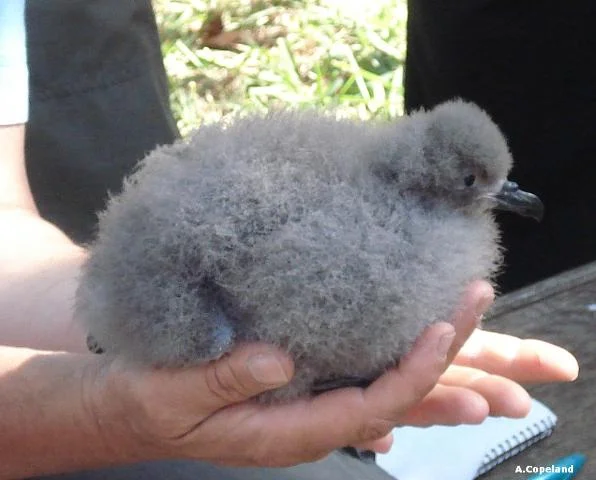
The Bermuda Petrel (Pterodroma cahow)
Commonly referred to as the Cahow, this is Bermuda's National Bird. It is a pelagic seabird, which means it spends most of its life out on the open ocean. They feed on small squid, fish and shrimp.
The Cahow was believed to be extinct for nearly 300 years until several were found in 1951. Since that time, dedicated conservationists have worked to bring this species back from the brink of extinction.
A Species Recovery Plan for the Cahow was written in 2005, it can be downloaded here.
A short clip of an adult Cahow (Bermuda Petrel) being removed from his burrow for weighing and a check of his identification band. This bird is the father of Somers, the Cahow chick that made headlines in 2009 as the first to be born on Nonsuch Island in over 300 years.
Learn More:
- Bermuda Government press release on the birth of the first Cahow chick on Nonsuch Island since 1620.
- The Fabled Cahow by Dr. David Wingate
- Department of Conservation Services Press Release: Cahow Population Reaches 101 Pairs for the First Time Since the 1600's. March 23rd 2012.
- Cahow Recovery Plan
Related Research:
- Most recent breeding season report: 2018/2019. Reports from past seasons available on the project page.
- Jeremy Madeiros, Nicholas Carlile and David Priddel. Breeding biology and population increase of the Endangered Bermuda Petrel Pterodroma cahow. Bird Conservation International, Available on Cambridge Journals Online 2012 doi:10.1017/S0959270911000396
- Nicholas Carlile, David Priddel and Jeremy Madeiros. Establishment of a new, secure colony of Endangered Bermuda Petrel Pterodroma cahow by translocation of near-fledged nestlings. Bird Conservation International, Available on Cambridge Journals Online 2012 doi:10.1017/S0959270911000372
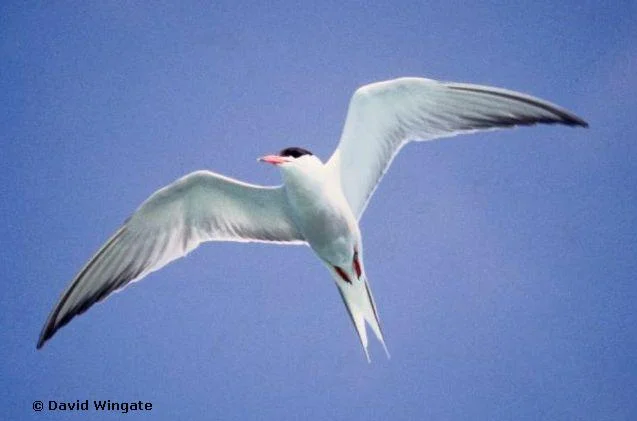
Common Tern - Protected Species Order - Level 1
Related Research:
- Szczys, Patricia, Ian, C.T. Nisbet, David B. Wingate. 2012. Conservation genetics of the Common Tern (Sterna hirundo) in the North Atlantic region; implications for the critically endangered population at Bermuda. Conservation Genetics, Vol. 13, Issue 4 pp1039 -1043.
- Ian C. T. Nisbet, David B. Wingate, and Patricia Szczys. Demographic Consequences of a Catastrophic Event in the Isolated Population of Common Terns at Bermuda. Waterbirds Sep 2010 : Vol. 33, Issue 3, pg(s) 405-410 doi: 10.1675/063.033.0319
- Wingate, D.B. 2011. Common Tern Update. Bermuda Audubon Society Newsletter 22:2.
- Wingate, D. B. 2007. Research on Bermuda’s Endangered Common Tern. Bermuda Audubon Society Newsletter 18:1.
Learn More:
- Threats facing Bermuda's breeding seabirds: Measures to assist future breeding success. by Andrew Dobson and Jeremy Madeiros. In Proceedings of the fourth International Partners in Flight Conference:Tundra to Tropics, 223-226.
- ARKive.org description
- IUCN Red List Record for Sterna hirundo
- Szczys, Patricia, Ian, C.T. Nisbet, David B. Wingate. 2012. Conservation genetics of the Common Tern (Sterna hirundo) in the North Atlantic region; implications for the critically endangered population at Bermuda. Conservation Genetics, Vol. 13, Issue 4 pp1039 -1043.
- Ian C. T. Nisbet, David B. Wingate, and Patricia Szczys. Demographic Consequences of a Catastrophic Event in the Isolated Population of Common Terns at Bermuda. Waterbirds Sep 2010 : Vol. 33, Issue 3, pg(s) 405-410 doi: 10.1675/063.033.0319
- Wingate, D.B. 2011. Common Tern Update. Bermuda Audubon Society Newsletter 22:2.
- Wingate, D. B. 2007. Research on Bermuda’s Endangered Common Tern. Bermuda Audubon Society Newsletter 18:1.
Learn More:
- Threats facing Bermuda's breeding seabirds: Measures to assist future breeding success. by Andrew Dobson and Jeremy Madeiros. In Proceedings of the fourth International Partners in Flight Conference:Tundra to Tropics, 223-226.
- ARKive.org description
- IUCN Red List Record for Sterna hirundo
White-eyed Vireo (Chick-of-the-Village) - Protected Species Order 2012 - Level 1
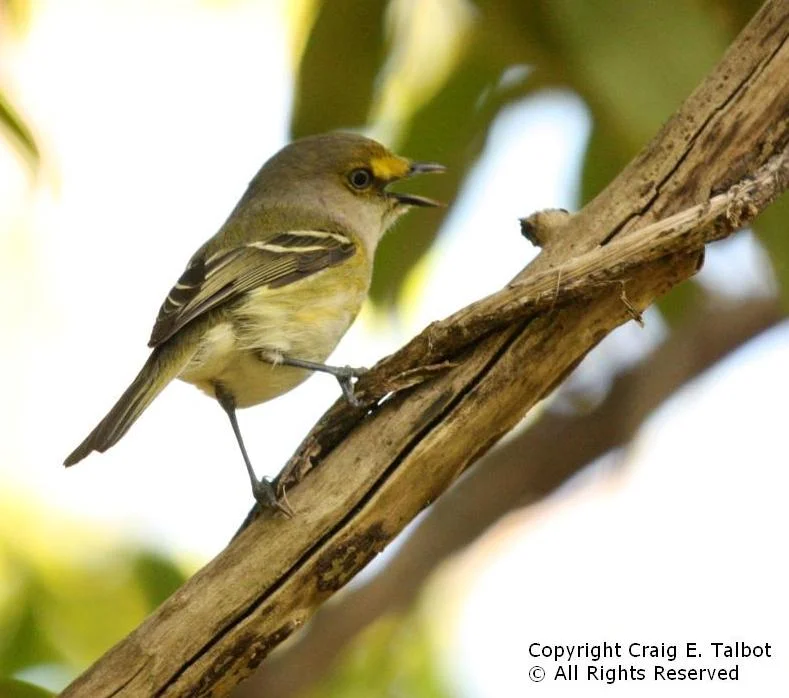
The White-eyed Vireo is commonly known in Bermuda as the 'Chick-of-the-Village'. The Bermudian population of this songbird is an endemic sub-species of the North American White-eyed Vireo. The Bermudian species has shorter wings and is a duller colour than its North American relative.

White-eyed Vireos can be found in woodlands and gardens island-wide. They are tame and curious, allowing birdwatchers close-up views.
The first Protected Species Management Plan for the Bermuda White-eyed Vireo was published in September 2021.
White-tailed Tropic Bird (Longtail) - Protected Species Order - Level 1
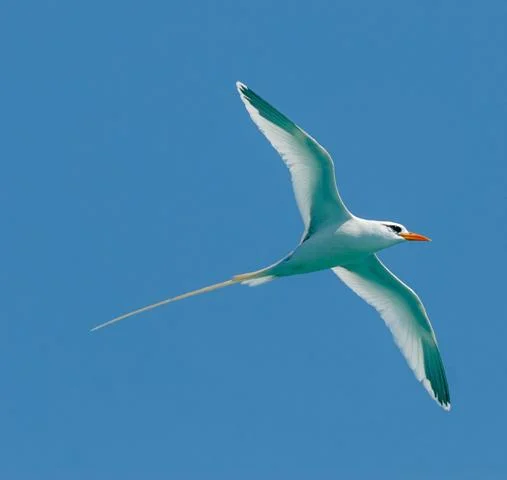
White-tailed Tropicbird or Bermuda Longtail (Phaethon lepturus catsbyii)
The White-tailed Tropicbird is almost always known in Bermuda has the ‘Longtail’ because of its distinctive tail feathers. This species is well known and much loved locally. Longtails are relatively large birds; adults can measure up to 30 inches (76cm) including the tail feathers, with wingspans up to 3ft (1m). The feathers are pure white, with diagonal black bars across each wing. These bars form a V shape when the flying bird is viewed from above. The wing tips are also black and there is a black band through the eye. The distinctive tail is composed of two extremely long feathers, surrounded by other short ones. Occasionally Longtails are seen that have lost both of the long feathers. The Longtail’s sharp, pointed bill is yellow in young birds, and turns to orange. The webbed feet are dark. Juvenile Longtails are white with various thick black bars on their backs, and they do not yet have the long tail feathers.
The Longtail is an open ocean species that only comes in to land to breed. It is a cavity-nester, which lays its single egg in holes and crevices eroded from the soft limestone of Bermuda’s coastal cliffs. When not in Bermuda, Longtails are at sea feeding on squid and open ocean fish, like Ocean Robins.
Longtails first appear in Bermuda between late February and the end of March, and have long been acknowledged by Bermudians as the first sign of spring. Pairs of birds can be seen in aerial courtship throughout April, and a single egg is laid at the end of April and beginning of May in the nest cavity. The egg is incubated in turn by both parents with most hatching in June or July. The parents return to the nest over the course of the summer with squid and small fish for the growing chick. The chicks fledge (fly from the nest) in late August and September when the parents stop brining it food. Fledging from a cliff face over the ocean is a dangerous operation for a chick that has never flown before and a number end up in the water below. Many of these eventually take to the air on their own, but a number are picked up by the Department and members of the public and brought to the Bermuda Aquarium Museum and Zoo where they are rehabilitated and later released.
The Longtail is the only seabird that nests in significant numbers in Bermuda, and in turn, Bermuda plays a critical role in the life history of this species. The species that occurs in Bermuda, Phaethon lepturus catsbyii is the Western Atlantic sub-species of Phaethon lepturus, which is globally distributed. Approximately 2,500 – 3,000 pairs of Longtails nest in Bermuda each summer. This represents half the breeding population of this species in the North Atlantic; with the other pairs nesting around the Caribbean Basin (Madeiros, 2011). Due to the international significance of Bermuda as a breeding ground for this iconic bird, many conservation activities have been undertaken to improve nesting success.
Despite these efforts, Bermuda’s population of nesting Longtails is declining. The Longtail’s cliff-front nesting sites are under increased threat from storm waves and hurricanes and the associated coastal erosion and flooding; as well as from development (such as the building of coastal retaining walls). The eggs and chicks of birds nesting on the main islands of Bermuda are particularly vulnerable to predation by domestic dogs and cats, including a growing population of feral cats. Even on the isolated outer islands chicks are vulnerable to predation from rats and crows (Madeiros 2011). Pigeons are also a threat as they compete for nesting cavities with the Longtails and foul the nests while the Longtails are at sea in the winter.
Intensive management to improve conditions for tropicbird breeding success are ongoing in the Castle Harbour Islands Nature Reserve. Activities include active control of rats and the installation of artificial nesting chambers (igloos) to supplement the stock of nest sites. Longtail Igloos are also available to the public through the Bermuda Audubon Society and the Department of Conservation Services and can be installed on coastal property. Monitoring of nests indicates that artificial nests are readily accepted by the birds, and the percentage of chicks successfully raised in them is high (Madeiros, 2011).
Longtails are protected by law under both the Protection of Birds Act 1975 and the Protected Species Act 2003. This protection extends to the birds themselves, their eggs and their nest sites.
Learn more:
- White-tailed Tropicbird or Longtail Eco File, written by Dr. David Wingate for the Bermuda Zoological Society.
- Artificial nest chambers - Longtail Igloos
Related Research:
- Report on Breeding Success and Status of the White-tailed Tropicbird in Bermuda 2011.
- Report on Tropicbird breeding surveys 2006-2008.
Fish
Spotted Eagle Ray - Protected Species Order 2012 - Level 1
Whale Shark - Protected Species Order 2012 - Level 1
Parrotfish (all species) - Fisheries Protected Species Order 1978 - Fisheries Act
Bermuda Killifish - Protected Species Order 2012 - Level 2
Lover's Lake Killifish - Protected Species Order 2012 - Level 2
American Eel - Protected Species Order 2012 - Level 2
European Eel - Protected Species Order 2012 - Level 2
Longsnout Seahorse - Protected Species Order 2012 - Level 1
Lined Seahorse - Protected Species Order 2012 - Level 1
Gag Grouper - Protected Species Order 2012 · Fisheries Order 1978 - Level 1
Snowy Grouper (Epinephelus niveatus) - Protected Species Order 2012 - Level 1
Mutton Hamlet (Alphestes afer) - Protected Species Order 2012 · Fisheries Order 1978 - Level 1
Protection Level Key
Level 1 Critically endangered — strictest protection
Level 2 Vulnerable / threatened
Fisheries Protected under the Fisheries Act 1972